Horseradish Leaves
It’s deep summer and I’m starting to be able to harvest things from my small home garden. It’s also a good time for experimentation. Have you ever seen or tried the leaves of a Horseradish plant? If not, this entry will be an eye opener and maybe an opportunity to try something a little different. There may be a healthy bonus as well.
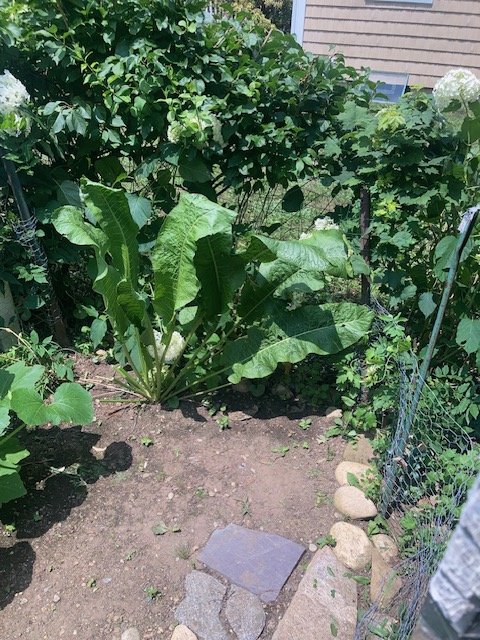
Last spring in 2025, a friend gifted me the horseradish root from her Passover Seder plate. I planted it in my garden and over the summer it sprouted into a small horseradish plant. I left it alone for the winter and this spring it just launched through the soil and the leaves have grown to comically large proportions. Some are over two feet long! I knew about the horseradish root but I didn’t know what to do with the leaves. I did some research and found that eating the leaves can have some healthy benefits:
Antioxidant support: They contain compounds like sinigrin and vitamin C that help fight cell damage from free radicals.
Reduced inflammation: Bioactive components in the greens may help lower inflammation and oxidative stress in the body.
OK. Worth a try. I nibbled at the edge of one of the mature leaves and it was tough and bitter. The baby leaves may be good for a salad but not these big guys.
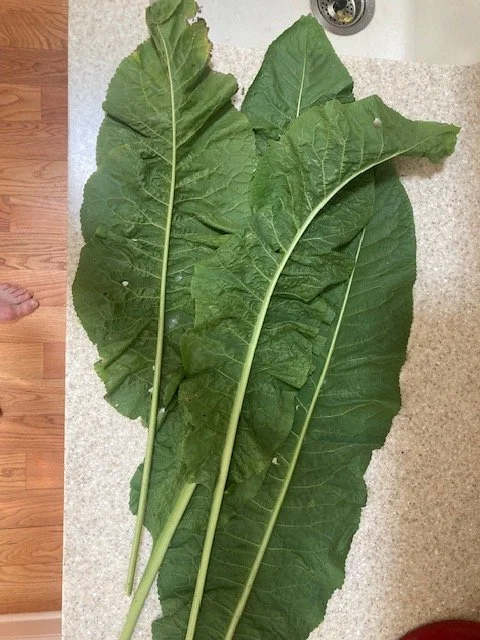
Next I tried to rip up the leaves and sauté them for an omelet but they were still tough and chewy. These were similar to the issues I’ve had with kale so I figured I would do what really worked well with kale - put the leaves on a baking sheet with oil, salt and pepper and bake at around 315 degrees F. until they are light and crunchy.
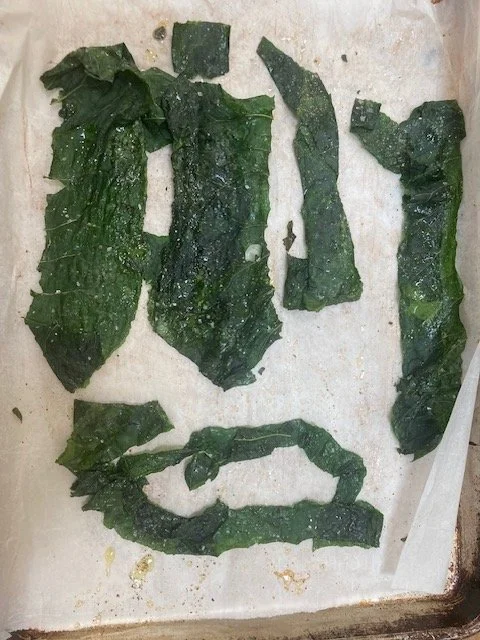
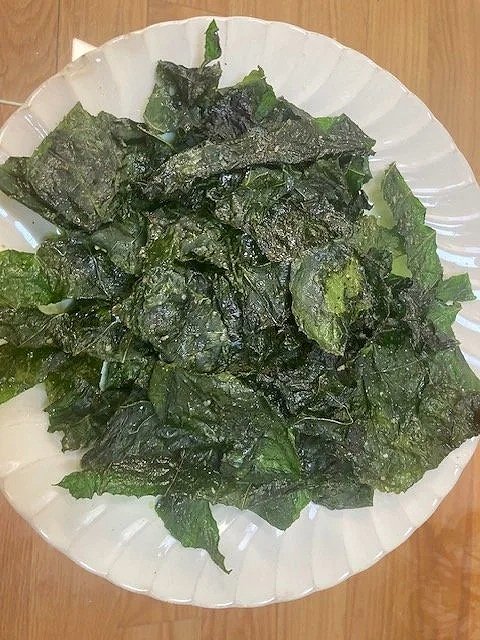
After cutting the leaf off of the thick, center stem, I tried making a few different shapes- rolling the leaf and cutting across to make lumpy spirals; cutting it into small squares; taking a quarter of a leaf and scrunching it up. What worked the best was keeping each side of the leaf intact and then draping it across the sheet pan. This way you can brush oil on the bottom of the sheet pan (or parchment paper - either works), lay down a layer of leaves, brush the tops with oil, sprinkle with spices, and then pop then into the oven. Quick and easy.
What happens is magical. The sheets of horseradish get tissue paper thin and almost melt in your mouth. The taste sensation is similar to those Snack Seaweed (Gim) sheets. It’s a healthy, natural snack that can travel from garden to table in about 20 minutes. Have fun adding different spices to give them a little kick - smoked paprika is nice. After trying these, you will want to plant some horseradish in your own garden. Enjoy!
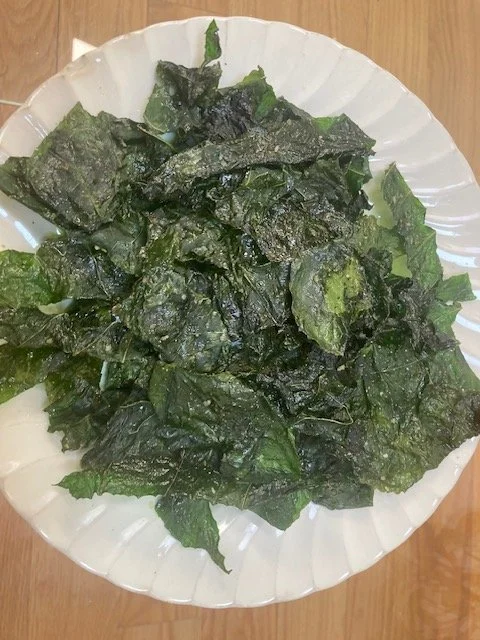
Horseradish Leaves
Prep Time: Pick, cut and clean leaves (10 minutes); Bake Time: (12-15 minutes until thin and crispy)
Ingredients
Horseradish Leaves: 2-3 per tray; stripped from stem; washed and dried
1 tablespoon olive oil (on a small plate or bowl for brushing)
Salt and Pepper to taste (other spices optional)
The Recipe
Preheat oven to 315 degrees F. Brush the bottom of a sheet pan lightly with oil.
Lay the leaves flat on the pan without overlapping or hanging over the edge. If you run out of space, use another sheet pan. Lightly sprinkle the leaves with salt and pepper. Bake for 12-15 minutes but watch closely after 10 minutes and taste to check the texture. All ovens are different and it’s a fine line between crispy and burnt.
NOTE: Try other spices on various sections of the tray to see how the different ingredients change the flavor. Discover what you like the best.